
INSIGHTS BLOG
Providing insightful, thought provoking
&
ultimately useful information
Recommended Reading: August 2021
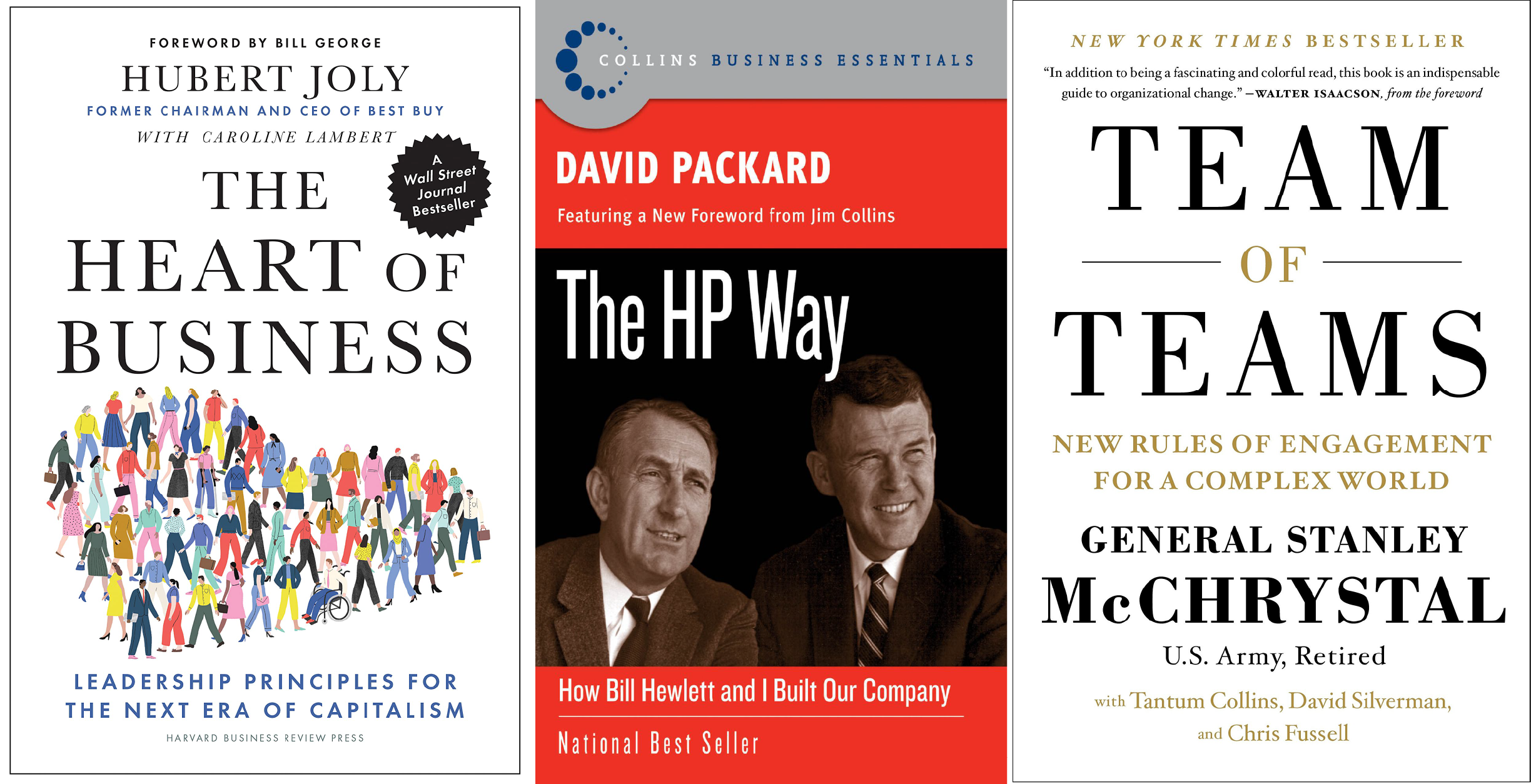
As a part of our continued commitment to providing the best resources for leaders to better themselves and thrive, for our August Reading List, we recommend these books: The Heart of Business: Leadership Principles for the Next Era of Capitalism by Hubert Joly with Caroline Lambert, The HP Way: How Bill Hewlett and I Built Our Company by David Packard, and Team of Teams: New Rules of Engagement for a Complex World by Gen. Stanley McChrystal, Tantum Collins, David Silverman, and Chris Fussell.
The Heart of Business: Leadership Principles for the Next Era of Capitalism - Hubert Joly with Caroline Lambert
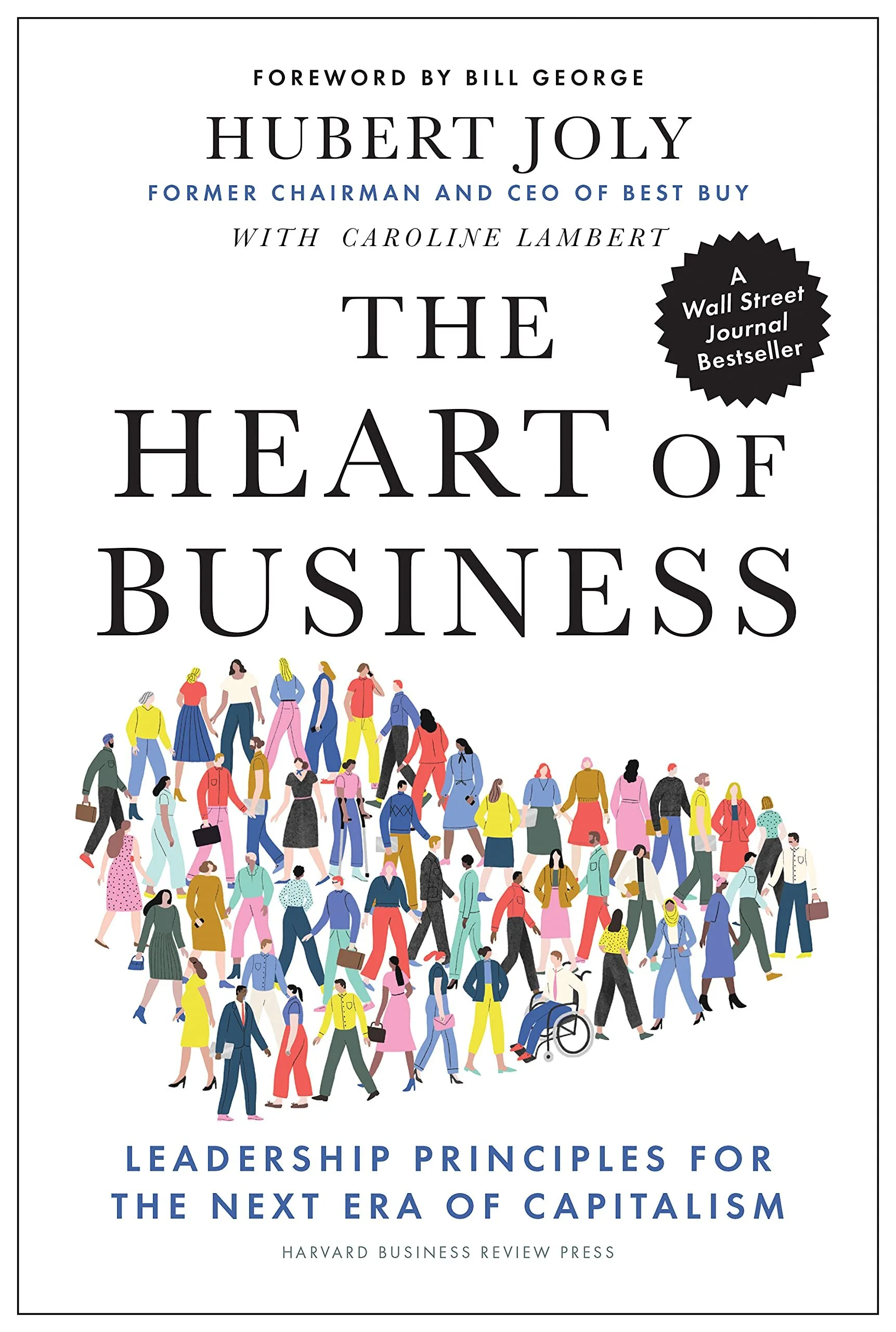
How to unleash "human magic" and achieve improbable results.
Hubert Joly, former CEO of Best Buy and orchestrator of the retailer's spectacular turnaround, unveils his personal playbook for achieving extraordinary outcomes by putting people and purpose at the heart of business.
Back in 2012, "Everyone thought we were going to die," says Joly. Eight years later, Best Buy was transformed as Joly and his team rebuilt the company into one of the nation's favorite employers, vastly increased customer satisfaction, and dramatically grew Best Buy's stock price. Joly and his team also succeeded in making Best Buy a leader in sustainability and innovation.
In The Heart of Business, Joly shares the philosophy behind the resurgence of Best Buy: pursue a noble purpose, put people at the center of the business, create an environment where every employee can blossom, and treat profit as an outcome, not the goal.
This approach is easy to understand, but putting it into practice is not so easy. It requires radically rethinking how we view work, how we define companies, how we motivate, and how we lead. In this book Joly shares memorable stories, lessons, and practical advice, all drawn from his own personal transformation from a hard-charging McKinsey consultant to a leader who believes in human magic.
The Heart of Business is a timely guide for leaders ready to abandon old paradigms and lead with purpose and humanity. It shows how we can reinvent capitalism so that it contributes to a sustainable future.
The HP Way: How Bill Hewlett and I Built Our Company - David Packard
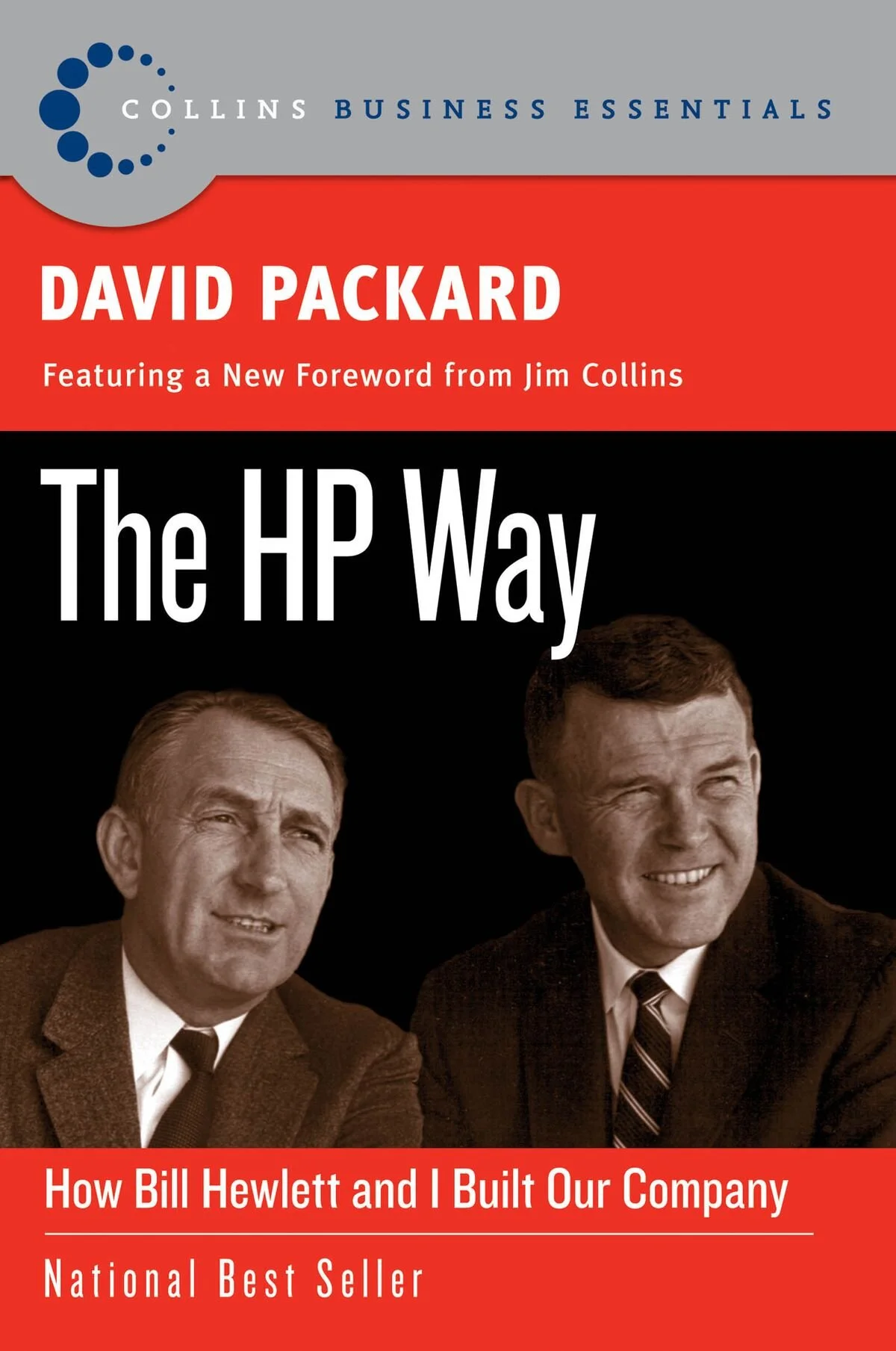
Much more personal than standard corporate histories, David Packard's The HP Way provides insights into managing and motivating people and inspiration for would–be entrepreneurs. This bestselling classic joins the Collins Business Essentials line–up with a new Note from Steve Jobs.
From a one–car–garage company to a multibillion–dollar industry, the rise of Hewlett–Packard is an extraordinary tale of vision, innovation and hard work. Conceived in 1939, Hewlett–Packard earned success not only as a result of its engineering know–how and cutting–edge product ideas, but also because of the unique management style it developed – a way of doing things called 'the HP way'.
Decades before today's creative management trends, Hewlett–Packard invented such strategies as 'walk–around management', 'flextime', and 'quality cycles'. Always sensitive to the needs of its customers and responsive to employee input, Hewlett–Packard earned massive steady growth that far outshone its competitors' vacillating fortunes, even with radically different products from those responsible for its initial boom.
For entrepreneurs and managers alike, the wisdom found in these pages is invaluable if they want their businesses to gain steady growth and consistent success.
Team of Teams: New Rules of Engagement for a Complex World- Gen. Stanley McChrystal, Tantum Collins, David Silverman, & Chris Fussell
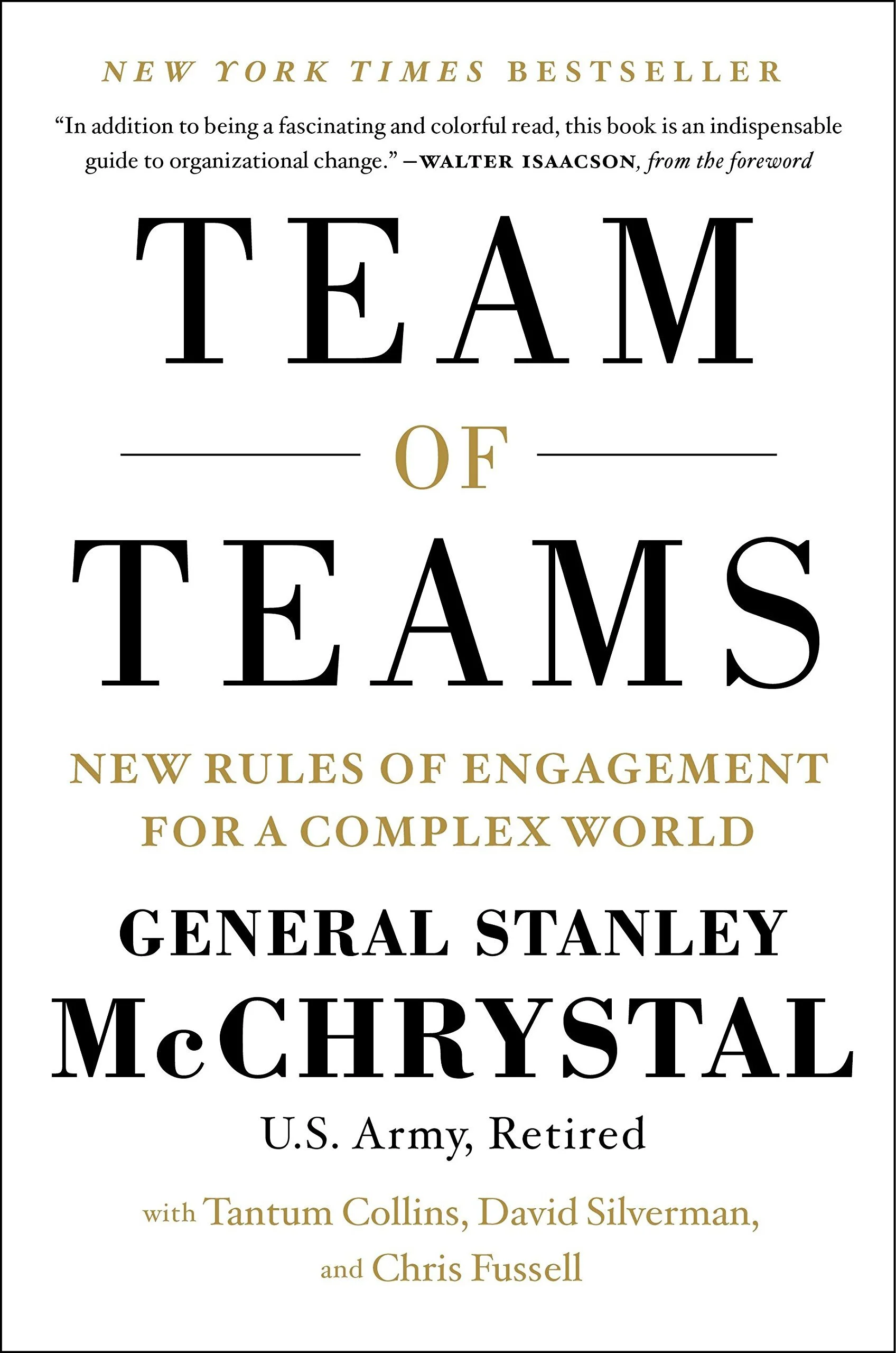
The retired four-star general and best-selling author of My Share of the Task shares a powerful new leadership model
Former general Stanley McChrystal held a key position for much of the War on Terror, as head of the Joint Special Operations Command. In Iraq he found that despite the vastly superior resources, manpower, and training of the US military, Al Qaeda had an advantage because of its structure as a loose network of small, independent cells. Those cells wreaked havoc by always staying one step ahead, sharing knowledge with each other via high-tech communications.
To defeat such an agile enemy, JSOC had to change its focus from efficiency to adaptability. McChrystal led the transformation of his forces into a network that combined robust centralized communication ("shared consciousness") with decentralized managerial authority ("empowered execution").
Now he shows not only how the military made that transition but also how similar shifts are possible in all kinds of organizations, from large companies to startups to charities to government agencies. In a world of rapid change, the best organizations think and act like a team of teams, embracing small groups that combine the freedom to experiment with a relentless drive to share what they've learned.
McChrystal and his colleagues explain their process for helping organizations embrace this model. They also share fascinating research and examples from settings as diverse as emergency rooms and NASA's mission control center.

The Market Advantage of Authenticity in Purpose
As business owners, we know it is quite disappointing when companies with promise prove themselves to be untrustworthy. We know the feeling – opening up our news apps to see a front-page headline of a company with great potential get caught up in a scandal. The large , public scandals, combined with mass layoffs in the pandemic, have created a more hesitant and market that is more distrustful of the business landscape overall.
A photo of PFD team members, and key partners, enjoying a hike in Colorado
How does your company stand out in such a market? Authenticity in purpose. Find out how you want to serve the community, authentically and wholeheartedly pursue that mission, and consider all stakeholders in decisions. Consider this quote:
“The idea has been that corporations exist to maximize shareholder value, but corporations are starting to realize that if you only focus on [financial returns], you create resistance for your growth, and that diminishes shareholder value over the long run. A smarter strategy is one that creates wealth by benefiting other stakeholders. When your growth is good for the community, employees, customers, government, the country, environment, the world, and thereby good for shareholders, that is the ultimate strategy, because everybody wants you to win.”
Genuinely investing in a purpose and mission, and authentically serving others, is a way you can build trust and loyalty with customers. However, cultivating authenticity is not easy – it takes real, disciplined work and intentional thought.
To cultivate authenticity in your business, you will need to:

Decide what’s most important to you.
While the needs of all stakeholders should be taken into consideration, every business can focus on a specific core purpose and cause. For example, while every business can take strides to reduce their carbon footprint, and source ecofriendly products, Patagonia has taken environmental conservation to heart, making their activism and ecofriendly practices a central part of their day-to-day operations. Conversely, another wonderful company, Capital III, leverages their portfolio companies to transform the lives of prisoners – employing them with good jobs, conducting leadership and skills training, and helping to ensure successful reentry. Both companies excel in their respective missions – contributing positively to the world that we live in. To help you understand where you want your business to make the most impact, check out our Legacy Vision tool.

Create accountability.
The next step in cultivating authenticity is to create systems of accountability, both in your personal leadership development and in your business.
Accountability in Personal Leadership Development.
The most effective way to cultivate accountability in personal leadership development is to get yourself into a peer group of similar business leaders. This peer group (also called a cohort or mastermind group) should consist of people who share the same experiences to mentor one another. These people should have similar goals of service as you, who will support you in your challenges, and who keep you in check to your moral obligations. They are the people who will candidly share their experiences and wisdom, to not only help you learn quicker, but also give input to make more holistic well-rounded decisions.
Invite relevant stakeholders to the table for decision making.
In creating systems of accountability for your business, it is important that you give the people that are impacted by your decisions a chance to voice their opinion. For example, Monty Moran, when he was Co-CEO of Chipotle, made it a priority to visit as many restaurant locations as possible, talk to the workers there, and from that develop his priorities. With consideration of his employees, Monty then developed a managerial pipeline, creating better opportunities for employees to advance with Chipotle. This simple act of having real, authentic conversations about the needs of employees, and following through with programs to benefit them, creates a level of trust and shows authenticity in caring.

Own up to past mistakes and learn from them
Companies are run by humans. As such, no leadership team will produce 100% perfect decisions. Perhaps, before the Covid-19 pandemic, your team was pursuing an aggressive investment strategy, reducing your cash on hand, so when the recession hit you had to terminate the employment of some people. If your company really cares about your employees, and you found yourself in this situation, let the employees impacted know that you recognize your mistake, and that you apologize for the way that mistake affected them. Then, you could put genuine effort into helping them in finding a new position. Chances are that the candor with which you approach this situation will soften the frustration and hurt the employee may feel. In the future then, you could potentially learn to make sure to have more cash on hand to mitigate risk, or not overextend on payroll. While we will inevitably make mistakes, it is important that we learn from them and strive to be better in the future.
With these three considerations, we can strive to create better, more authentic businesses that our customers, communities, and employees can trust.

In Your Corner: Cultivating Leadership Growth with Others
The phrase “It’s lonely at the top” rings painfully true for some of us business leaders. If you are a CEO, you have likely experienced isolation that tends to come with the job. As a CEO, you are responsible for the livelihoods of the people in your entire organization, as well as their families, and your own family. That’s a lot of pressure. Further, if you are not careful, you also might be subject to an echo chamber of your senior leadership team only corroborating your ideas (rather than coming up with novel strategies to reach your goals) – leaving you to solely do the creative work. The point: as CEOs, we can become very isolated and stressed, very quickly. What we need is to develop a network of people around us – people who are in our corner – to confide in, garner creative ideas, invest in, and ultimately give us the confidence and clarity to make decisions in our business.
A good guide for developing such a network is the “Three Cs”: Coach, Cohort, and Community.

The first kind of key relationship in the network you cultivate should be a strategic coach. While we are a biased source with this recommendation, we have seen first-hand the transformation a coach can have on your organization. With professional sports, we would never expect our favorite teams to win games without a good coach. A great coach, like John Wooden, can propel teams to extraordinary success. Such is true with business professionals as professional athletes – a great business coach can act as a trusted guide to propel you to higher levels of success. They can be your confidant, helping to address your challenges by providing an impartial perspective. Further, coaches can bring a deep knowledge of proven tools and execution rhythms as well as reduce stress by helping you to cultivate simplicity in your business.

The second kind of key relationships that we recommend you cultivate is a cohort. For reference, a cohort is a group of people who share the same experiences to mentor one another. They are the people in your corner – who know your experiences (also CEOs), who have a similar mission to you, who will support you in your challenges, and who keep you in check to your moral obligations. They are the people who will share with you openly, so you can learn from them to reach your goals more quickly. In these cohorts, everyone is mutually invested in each other’s growth, and it is a place to gain wisdom and insight from your peers. Modern Psychology and Sociology backs the benefits of these sorts of relationships – terming them “strong ties” – nurturing ourselves and our ability as leaders. Many CEOs participate in cohorts already, calling them mastermind groups.

The third kind of key relationships that we recommend you cultivate is a community. In the context in which we are speaking, a community encapsulates the broader reach into the world that you have – the acquaintances in your network from all over. These connections, per a Sociological and Psychological framework, are termed “weak ties”, and they are valuable because they give you broad access to people and resources that can help you further your mission (and you can do the same for them as well). Essentially, these are the people in your rolodex. These are the people that will welcome you into their neighborhoods, partner with you with their organizations and associations, and create mutually beneficial relationships that allows your impact to have a far reach. These are the people to call upon to source talent, strike deals, and organize philanthropic efforts. With a strong community, you will never have a shortage of people to call upon to solve problems and strategize a better shared future.
With a coach, a cohort, and a community, you will have both the strong personal connections that foster growth, and the access to broader networks (with people and resources) that make your impact possible.

Recommended Reading: July 2021
As a part of our continued commitment to providing the best resources for leaders to better themselves and thrive, for our July Reading List, we recommend these books: Who Not How: The Formula to Achieve Bigger Goals by Dan Sullivan with Dr. Benjamin Hardy, and BE 2.0 (Beyond Entrepreneurship 2.0): Turning Your Business into an Enduring Great Company by Jim Collins.
Who Not How: The Formula to Achieve Bigger Goals - Dan Sullivan with Dr. Benjamin Hardy
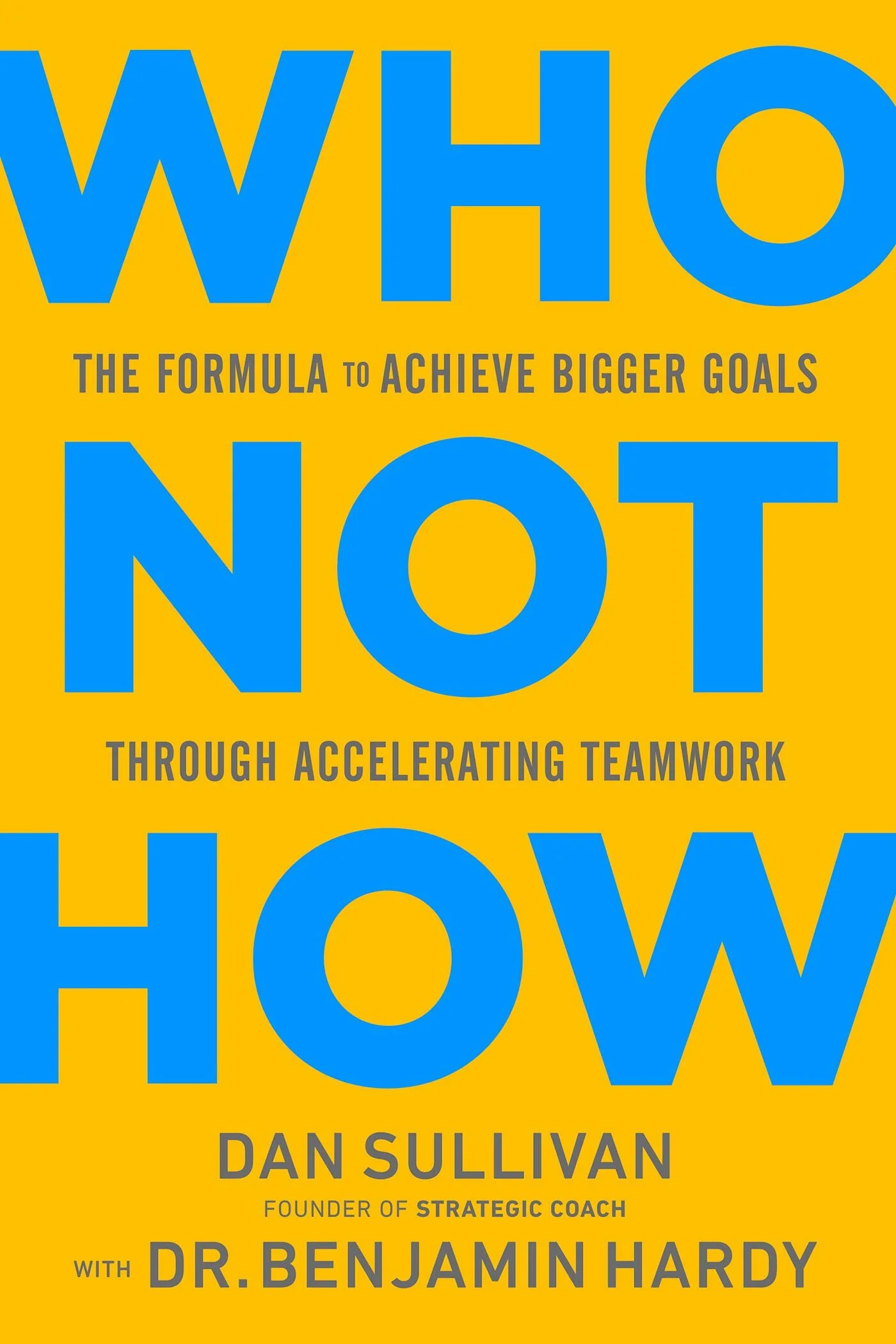
The world's foremost entrepreneurial coach shows you how to make a mindset shift that opens the door to explosive growth and limitless possibility--in your business and your life.
Have you ever had a new idea or a goal that excites you... but not enough time to execute it? What about a goal you really want to accomplish...but can't because instead of taking action, you procrastinate? Do you feel like the only way things are going to get done is if you do them? But what if it wasn't that way? What if you had a team of people around you that helped you accomplish your goals (while you helped them accomplish theirs)?
When we want something done, we've been trained to ask ourselves: "How can I do this?" Well, there is a better question to ask. One that unlocks a whole new world of ease and accomplishment. Expert coach Dan Sullivan knows the question we should ask instead: "Who can do this for me?"
This may seem simple. And it is. But don't let the lack of complexity fool you. By mastering this question, you will quickly learn how billionaires and successful entrepreneurs like Dan build incredible businesses and personal freedom.
This book will teach you how to make this essential paradigm-shift so you can:
Build a successful business effectively while not killing yourself
Immediately free-up 1,000+ hours of work that you shouldn't be doing anyway
Bypass the typical scarcity and decline of aging and other societal norms
Increase your vision in all areas of life and build teams of WHOs to support you in that vision
Never be limited in your goals and ambitions again
Expand your abundance of wealth, innovation, relationships, and joy
Build a life where everything you do is your choice--how you spend your time, how much money you make, the quality of your relationships, and the type of work you do
Making this shift involves retraining your brain to stop limiting your potential based on what you solely can do and instead focus on the nearly infinite and endless connections between yourself and other people as well as the limitless transformation possible through those connections.
BE 2.0 (Beyond Entrepreneurship 2.0): Turning Your Business into an Enduring Great Company - Jim Collins
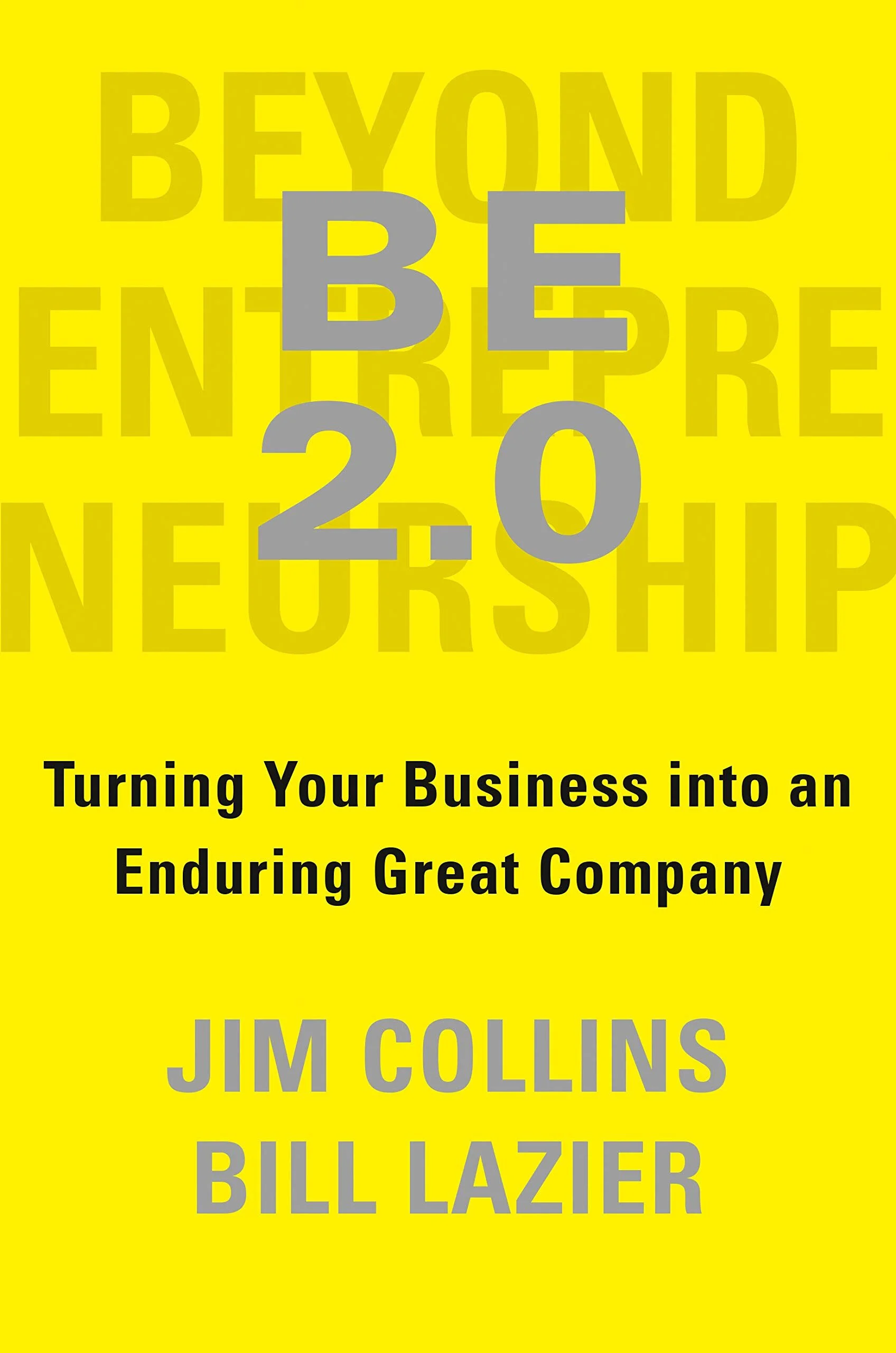
From Jim Collins, the most influential business thinker of our era, comes an ambitious upgrade of his classic, Beyond Entrepreneurship, that includes all-new findings and world-changing insights.
What's the roadmap to create a company that not only survives its infancy but thrives, changing the world for decades to come?
Nine years before the publication of his epochal bestseller Good to Great, Jim Collins and his mentor, Bill Lazier, answered this question in their bestselling book, Beyond Entrepreneurship.
Beyond Entrepreneurship left a definitive mark on the business community, influencing the young pioneers who were, at that time, creating the technology revolution that was birthing in Silicon Valley. Decades later, successive generations of entrepreneurs still turn to the strategies outlined in Beyond Entrepreneurship to answer the most pressing business questions.
BE 2.0 is a new and improved version of the book that Jim Collins and Bill Lazier wrote years ago. In BE 2.0, Jim Collins honors his mentor, Bill Lazier, who passed away in 2005, and reexamines the original text of Beyond Entrepreneurship with his 2020 perspective.
The book includes the original text of Beyond Entrepreneurship, as well as four new chapters and fifteen new essays. BE 2.0 pulls together the key concepts across Collins' thirty years of research into one integrated framework called The Map. The result is a singular reading experience, which presents a unified vision of company creation that will fascinate not only Jim's millions of dedicated readers worldwide, but also introduce a new generation to his remarkable work.
Capturing the Momentum of the Economic Recovery: Accelerate Your Growth in the Second Half of 2021
If you are a business leader, you are likely still experiencing the lingering effects and stress of the global pandemic. You might be facing supply shortages, a reduced pipeline, and staffing shortages, as well as lingering doubts from the challenges you have endured from the last year. This being said, you also likely know that the economy is recovering – spending is increasing, unemployment is dropping, and by the end of the year, the gross domestic product is even projected to reach, at least temporarily, the path that was projected for it had the pandemic never happened.
Now, as a leader of your company, you might be in a rather challenging position. For over a year, you had to firefight – dealing with an unpredictable market in a time of international uncertainty, while also taking care of the people you employ and in your community. Now, to scale your business and capitalize on the economic recovery, you must switch mentalities – from surviving to thriving. While this might sound challenging, we have three tips on actions you can take to put yourself in the right headspace for growth in the second half of 2021.
Align to a Mission
First, to get out of your head, we recommend that you focus on something that is bigger than yourself. At PFD, we are deeply passionate about the profound importance of having a vision and mission for your life and company, how they can clarify your thinking, and get you out of daily firefighting. By creating or reconnecting with a mission and vision for your company and your life, you can become inspired again – aligning toward where you would like to be long-term, and taking steps to get there. This can be an effective way to fight against burnout and reignite passion. If you would like to learn more about creating an effective vision and purpose for your company, check out the blog post here.
Get the Right People
Getting the right people into your organization can be the greatest opportunity and the greatest challenge that you face. On one hand, with unemployment decreasing, the market is getting more competitive to find great talent, but on the other, having the right people in the right roles will be transformational for your organization. Often, to get the right people, you have to be creative. To create a creative sourcing plan, take fifteen minutes to consider the questions below to identify potential sources of talent that fit your company culture:
Who do you need to talk to at your local Universities or Community Colleges?
Are there nonprofits aligned with your mission whose board you need to be on?
Are there major community events that you need to chair or be on the planning committee for?
Are there other well-run organizations whose leaders you need to partner with?
Who are the five most influential people in your industry that you should talk to?
Who are the five most influential people in your community that you should talk to?
Who do you need to buy lunch?
Focus on what you can control
Finally, while there is a lot about our businesses that are not directly in our control, like supply chains and sales pipelines, we suggest that you focus on what you can control. It is a simple concept - easier said than done. We have found that there are two things senior teams can do that will set you up for growth in the latter half of 2021.
Cultivate Operational Excellence
If your pipeline is slow at the moment, perhaps you can use this season where you are less busy to cultivate operational excellence in your organization. Perhaps this means you roll out a new project management software, or any other software you have been avoiding putting into your organization because of the length of time it will take to install. Perhaps you update employee manuals, get the team into an online dashboard, or cultivate a coaching rhythm that allows you to coach your team candidly and consistently for success. Whatever the case, use this time to intentionally work on your operations so that you and your team have the capacity for growth later in the year.
Conduct Senior Leader Planning Sessions
Having the right people in the right roles on your team is critical for success. These are the people, if they are A Players, that will come up with creative solutions for challenges and help reignite passion among your other senior team members. Having the right people in these key roles, and actively communicating with these people via senior leader planning sessions, will take pressure off you as the CEO and lead to better outcomes overall.
With the economic recovery already happening, right now is when we need to invest time and energy to transforming our mindset and business to scale. If you would like to inquire about senior planning sessions, please contact us here.

Recommended Reading: June 2021
As a part of our continued commitment to providing the best resources for leaders to better themselves and thrive, for our June Reading List, we recommend these books: Metronomics: One United System to Grow Up Your Team, Company, and Life by Shannon Susko Play Bigger: How Pirates, Dreamers, and Innovators Create and Dominate Markets by Al Ramadan, Dave Peterson, Christopher Lochhead, & Kevin Maney, and A Better Life for Their Children: Julius Rosenwald, Booker T. Washington, and the 4,978 Schools That Changed America by Andrew Feiler (Author), John Lewis (Foreword), Jeanne Cyriaque (Contributor), Brent Leggs (Contributor).
Metronomics: One United System to Grow Up Your Team, Company, and Life - Shannon Susko

As a business leader, you’ve read dozens of books by the top thought leaders, learning from their research, principles, and tools. Each book dives deep into a specific area of expertise—strategy, execution, cash, people, culture, and leadership. All share powerful concepts on what to do to grow your business. But how do you efficiently unite these tools into a regimen that works for not just one specific area of your business, but for your entire team, company, and life?
Metronomics unites top business thought leadership with over twenty years of proven practical experience. The outcome is a prescriptive progressive growth system for every business. In this book, you’ll learn how to build a high-performing business team that achieves superior results with ease, speed, and confidence. You’ll learn the practical progression that ensures your team is fiercely connected to your strategic execution system. No matter what level you and your team are at right now, Metronomics will meet you where you are—and grow with you to the next level and beyond.
The best-kept business secret for the past twenty years, Metronomics will allow your company to win your business Olympics every year, and as a leader, it will set you free.
Play Bigger: How Pirates, Dreamers, and Innovators Create and Dominate Markets - Al Ramadan, Dave Peterson, Christopher Lochhead, & Kevin Maney

The founders of a respected Silicon Valley advisory firm study legendary category-creating companies and reveal a groundbreaking discipline called category design.
Winning today isn’t about beating the competition at the old game. It’s about inventing a whole new game—defining a new market category, developing it, and dominating it over time. You can’t build a legendary company without building a legendary category. If you think that having the best product is all it takes to win, you’re going to lose.
In this farsighted, pioneering guide, the founders of Silicon Valley advisory firm Play Bigger rely on data analysis and interviews to understand the inner workings of “category kings”— companies such as Amazon, Salesforce, Uber, and IKEA—that give us new ways of living, thinking or doing business, often solving problems we didn’t know we had.
In Play Bigger, the authors assemble their findings to introduce the new discipline of category design. By applying category design, companies can create new demand where none existed, conditioning customers’ brains so they change their expectations and buying habits. While this discipline defines the tech industry, it applies to every kind of industry and even to personal careers.
Crossing the Chasm revolutionized how we think about new products in an existing market. The Innovator’s Dilemma taught us about disrupting an aging market. Now, Play Bigger is transforming business once again, showing us how to create the market itself.
A Better Life for Their Children: Julius Rosenwald, Booker T. Washington, and the 4,978 Schools That Changed America - Andrew Feiler (Author), John Lewis (Foreword), Jeanne Cyriaque (Contributor), Brent Leggs (Contributor)

A Sarah Mills Hodge Fund publication
Born to Jewish immigrants, Julius Rosenwald rose to lead Sears, Roebuck & Company and turn it into the world’s largest retailer. Born into slavery, Booker T. Washington became the founding principal of Tuskegee Institute. In 1912 the two men launched an ambitious program to partner with black communities across the segregated South to build public schools for African American children. This watershed moment in the history of philanthropy―one of the earliest collaborations between Jews and African Americans―drove dramatic improvement in African American educational attainment and fostered the generation who became the leaders and foot soldiers of the civil rights movement.
Of the original 4,978 Rosenwald schools built between 1917 and 1937 across fifteen southern and border states, only about 500 survive. While some have been repurposed and a handful remain active schools, many remain unrestored and at risk of collapse. To tell this story visually, Andrew Feiler drove more than twenty-five thousand miles, photographed 105 schools, and interviewed dozens of former students, teachers, preservationists, and community leaders in all fifteen of the program states.
A Better Life for their Children includes eighty-five duotone images that capture interiors and exteriors, schools restored and yet-to-be restored, and portraits of people with unique, compelling connections to these schools. Brief narratives written by Feiler accompany each photograph, telling the stories of Rosenwald schools’ connections to the Trail of Tears, the Great Migration, the Tuskegee Airmen, Brown v. Board of Education, embezzlement, murder, and more.
Beyond the photographic documentation, A Better Life for Their Children includes essays from three prominent voices. Congressman John Lewis, who attended a Rosenwald school in Alabama, provides an introduction; preservationist Jeanne Cyriaque has penned a history of the Rosenwald program; and Brent Leggs, director of African American Cultural Heritage at the National Trust for Historic Preservation, has written a plea for preservation that serves as an afterword.

The Ethics of Hiring Well

A teammate (right) and me (left) at Ethics Bowl at the Regional High School Championships, 2016
In college, my friends used to tease me for being an ethics nerd. My love for ethics began back in high school, where I was a part of my school’s inaugural ethics bowl team – even placing at our regional competition in Utah. After high school, I reached out to the staff advisor to join my collegiate ethics bowl team before I even arrived on campus. In ethics bowl, we discussed a multitude of topics, from the ethicality of using beta testing when developing software in self-driving cars, to the treatment of children born with anencephaly, even to the ethics of colonizing Mars. Being a part of these teams and these conversations profoundly shaped my outlook on my life and career and has jumpstarted my curiosity of how to live out as an ethical business leader.
In fact, the ethics of business decisions have been a hot topic on everyone’s mind lately – from discussions on stakeholder theory, to the triple bottom line, to the conscious capitalism movement. Within these broader movements towards business ethics, there are countless topics within day-to-day business activities that need to be explored from an ethical standpoint. One such topic is hiring.
What does it mean to hire well? What are the impacts of hiring well?
Hiring well doesn’t necessarily mean you hire the top graduates from Ivy League schools, nor does it mean requiring experience for entry level positions. What hiring well means is that you answer “yes” to this one question: Knowing what you know now (after a person has been working at your company) would you enthusiastically rehire them? These applicants can come from diverse backgrounds, but they must be a core value fit and do their job well. If someone isn’t a good fit for their job, you can create stress for yourself and other employees who will need to pick up the slack, as well as lost revenue. If someone is not a good core value fit, you run the risk of devaluing your culture, creating frustration, and even driving away some of your employees who are good fits.
With so much on the line, hiring well is extraordinarily important, both for your business success and to better the quality of life for your employees. At PFD, we recommend the Topgrading Methodology for hiring. The idea behind Topgrading is simple. Most companies hire fast and fire slow, and by doing this, they are hiring and keeping people in their organizations who they wouldn’t “rehire” if given the opportunity. Topgrading adds rigor – it allows those who are making the hiring decisions to truly take their time and consider their candidates. By adding this rigor, we are ensuring that we truly are hiring the right people in the right roles – vastly increasing the success rate hiring from 50% to 90%. We recommend reading the book Topgrading by Brad and Geoff Smart for more information on this process.
We’ve talked about the impacts of hiring well, and the process we recommend using for hiring. Now, for those of you who are ethics nerds like me, let’s discuss some ethical theories as applied to hiring.

Utilitarianism
Quite simply, Utilitarianism asks: what creates the greatest good for the most people, while minimizing suffering? It is also called Consequentialism, because it looks at the consequences of an action to determine its morality.
Under a utilitarian lens, it is a moral imperative to hire well. Taking time to hire well – to have the right people who fit the culture and excel at their jobs – will result in the greatest good for the most amount of people, both in the company and out. As we have described above, hiring poorly can result in stress and frustration to the employees, thus causing harm. Further, assuming the company has some involvement in the community, a mishire can result in lost revenue, thus reducing the number of resources the business has to give back to causes. Conversely, a good hire who fits the culture can add to the quality of life of fellow employees, and can increase our resources to give back to our communities.
Kantianism
According to Kantianism, determining morality means asking ourselves, “if we were to imagine a world where everyone was to do this action, would it still be viable?” If the action is not viable if everyone were to do it, we have a duty to behave differently. For example, if a manufacturing company were heavily polluting a local river, their actions would be unethical, because everyone polluting a river would make the environment surrounding uninhabitable. Additionally, under this ethical theory, we have a moral duty to treat people with respect, because they are rational thinkers, and never as a means to an end. So, in this theory, it would be unethical for an employer to hire somebody and intentionally grossly underpay their starting salary to save money. That would not be treating them with respect to themselves as rational actors, and they would be using that employee as a means to an end (saving cash).
Under a Kantian lens, it is also an ethical duty of ours to take the time to hire well. We might know a great salesperson who could bring some deals to the company, but doesn’t fit the core values, and according to this theory, we shouldn’t hire them. This is because making exceptions to our hiring process would undermine the duty we had to our other employees, who both fit the culture and do well in their roles. Further, to hire someone into a position or culture that they cannot do well in, is not respectful to them or their time that they spent with you at your company.
Ethics of Care
Contrasted with the first two theories, this third theory holds that morality is centered on interpersonal relationships, as well as benevolence (or care) is a virtue. Under this theory, the interpersonal relationships that you have with people matter. For example, if you have a long-standing relationship with a supplier (assuming this supplier also acts ethically), this theory contends that you should not switch suppliers just to save a couple of bucks on the cost of goods sold.
Under an ethics of care lens, it is especially important to take the time and effort to hire candidates who fit the culture, and who excel in their jobs. When we hire people, we are making a commitment to their longer-term success. When we hire someone, we can build relationships with them over time, and to create a culture where our employees’ relationships with one another can thrive. To mishire someone can dissolve culture and trust quickly, thereby eroding these relationships.
Of course, we can’t always get the right hires in the right roles 100% of the time, but it is important that we take the time to create hiring strategies and processes in place to maximize our chances of success. If you would like to talk about your hiring process and strategy, we would be happy to talk with you.

Why do I Need a Strategic Coach?
As sports fans, we would never expect our favorite athletes to win games without coaches. Could you imagine an Olympic gymnast getting a gold medal without someone to correct their form and push their limits? Could you imagine an American football team winning the Superbowl with the Quarterback responsible for calling all the plays, analyzing the opposing team, and coaching the defense in addition to the offense?
When we think of professional athletes, we understand how ridiculous it is to expect them to compete and win on a high level without a coach. This being said, when it comes to business leaders, we tend to expect them to perform at extraordinarily high levels without a similar kind of guidance. Like athletes, business leaders are professionals. They need to understand their strategy, execute that strategy, pivot to various demands, consistently be learning new skills, work with and lead their teams, all so that they can win in the marketplace. With all of these duties, plus ensuring that the day-to-day activities are completed, there is an extreme amount of pressure on the CEO and leadership team. This is where a business coach can help.
Take a look at this video of Bill Gates and Eric Schmidt:
Despite the need for a coach, we have found that, in the market, there is some confusion as to what exactly strategic coaches do. Let’s provide some clarity.

Reduce stress by creating simplicity in strategy and building teams
“I really enjoy working with Ethan for not only his creative strategic insights, but also for his ability to recruit and inspire diverse teams for lasting results.”
First and foremost, as strategic coaches, our goal is to reduce your stress as CEOs. Typically, when CEOs come to us for coaching services, they spend the majority of their days firefighting – jumping from task to task that is necessary for business survival. In the past, when their company was smaller, these CEOs could handle many of these smaller tasks personally. As the company scales, however, these leaders find that there simply aren’t enough hours in the day to handle all that is asked from them, and their days are becoming filled very quickly with duties that don’t seem to matter this much. Exacerbating these stressful days, if the CEO were to continue like this, it is very unlikely that the company would grow, because the CEO doesn’t have time to spend on their vision of the future, nor do they have the time to guide their team in getting there.
As a coaching company, it is our job to help you get out of this daily firefighting mode through both helping you simplify your strategy, as well as build a phenomenal team of leaders to support you in making that strategy come to fruition. Unnecessary complexity breeds wasted time. We will help you gain confidence and clarity in an actionable strategy that you are excited about. Further, we will engage your leadership team in the planning process, creating alignment around the strategy. We will also advise on any significant gaps in the leadership team, and how to fill them in with the right people. Many of the tasks that take up a CEO’s time could realistically be handled by a different, trusted member of the leadership team, and these team members could take on even more responsibility to drive the company into its next stage of growth. This both frees the CEO’s time to work on the business (as opposed to in the business), while creating sustainable growth.
““Everything that your team has done for us has enabled us to grow and learn in ways that are not just solving problems and putting out fires. You can get so bogged down in the minutiae of chasing your tail, and if you don’t dedicate time to growing leaders, you’re going to end up running everything in your company. And that’s not what I wanted to do. I didn’t want my job to own me.””

Deep knowledge of proven growth tools and execution rhythms
I’ve never gone to the gym and benefitted from watching someone else lift weights. I’ve had personal trainers show me how to lift weights, walk me through the proper form several times so I am confident and clear on my exercise routine, and that has been extremely helpful. The real power of going to the gym comes when I take what I’ve learned, and I consistently put it into practice – exercising consistently using proper form and routines. It is when I do that, that the trainer can coach me to the next level, introducing more advanced lifts and increasing weight.
At PFD, we have a similar approach to a personal trainer. With twenty years of entrepreneurial and coaching experience, plus coaching certifications through Scaling Up and 3HAG Way, we have in-depth knowledge of the strategic tools and execution rhythms that have helped thousands of companies scale their practices. Further than that, we have invested in our team to be able to support the integration of these systems into your company. Our Director of Client Success, Karissa Feese, has been doing an amazing job with our current clients teaching the software systems to leadership team members to keep the strategy central to day-to-day activities. Importantly, we won’t fill out or update these tools for you, as that would be like going to the gym and watching the trainer lift your weights for you. Rather, by implementing use of the tools, execution rhythms and software, your team will become stronger.
“After one year of working with PFD Group, we reached and exceeded goals that we didn’t think were possible at the beginning of the year.”
Being a trusted confidant and seeing the blind spots.
Finally, as a coach, it is my job to understand and help CEOs work through the things that have been keeping them up at night. We have the privilege of working with many CEOs across several industries, which gives us the ability to see reoccurring patterns and creatively produce solutions. When you’re in a company each day, it is inevitable to develop blind spots. Through our position as a coaching company, it is our duty to surface those issues to be solved, so that you are not blindsided by them at a later point. At PFD, one of our core values is to be the confidant - nurturing a culture of confidentiality, trust, and vulnerability. We recognize our responsibility in our positions as coaches, because when our clients reach out to us, they share their greatest opportunities and challenges. We do not take this responsibility lightly.
““Ethan, thank you for your constant encouragement and coaching. I could not have done it without you over the last two years. Thank you for being you - a compassionate, caring, coach.””
As the CEO, you are the quarterback and the captain of your team. You are on the field, leading your team, making the plays, and driving your business forward. You deserve to have someone have your back. As a coach, we have a vested interest in your growth, both as a leader and within your company. We aim to reduce your stress by drive simplicity in your strategy and building a strong leadership team around you, and we will help you implement execution rhythms and tools to consistently make progress on your strategy. Simply put, we will help you grow, while simultaneously helping you make running a company easier.
Recommended Reading: May 2021
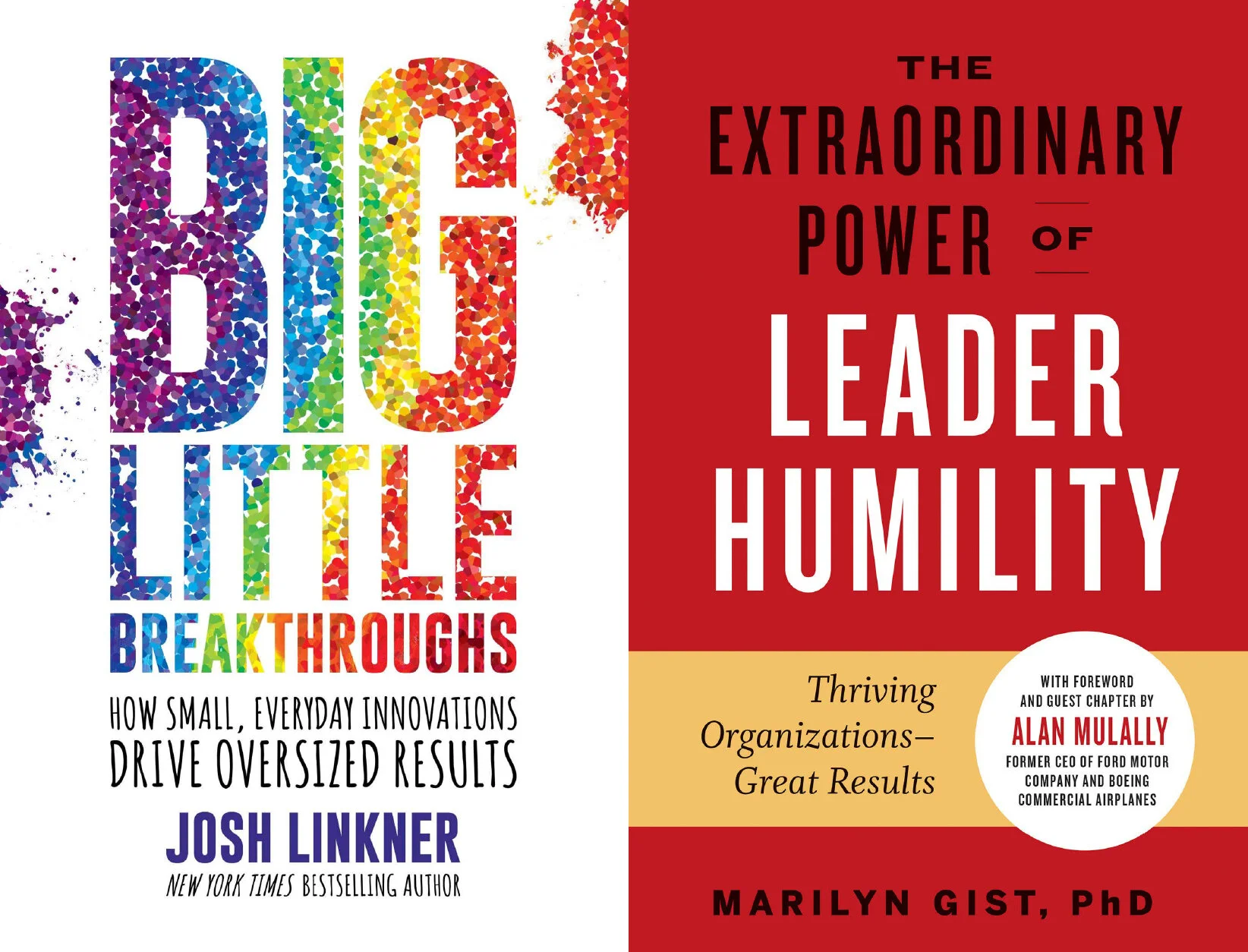
As a part of our continued commitment to providing the best resources for leaders to better themselves and thrive, for our May Reading List, we recommend these two books: Big Little Breakthroughs: How Small, Everyday Innovations Drive Oversized Results by Josh Linkner, and The Extraordinary Power of Leader Humility: Thriving Organizations – Great Results by Marilyn Gist, PhD.
Big Little Breakthroughs: How Small, Everyday Innovations Drive Oversized Results - Josh Linkner

A surprisingly simple approach to help everyday people become everyday innovators.
The pressure to generate big ideas can feel overwhelming. We know that bold innovations are critical in these disruptive and competitive times, but when it comes to breakthrough thinking, we often freeze up.
Instead of shooting for a $10-billion payday or a Nobel Prize, the most prolific innovators focus on Big Little Breakthroughs—small creative acts that unlock massive rewards over time. By cultivating daily micro-innovations, individuals and organizations are better equipped to tackle tough challenges and seize transformational opportunities.
How did a convicted drug dealer launch and scale a massively successful fitness company? What core mindset drove LEGO to become the largest toy company in the world? How did a Pakistani couple challenge the global athletic shoe industry? What simple habits led Lady Gaga, Banksy, and Lin-Manuel Miranda to their remarkable success?
Big Little Breakthroughs isn’t just for propeller-head inventors, fancy-pants CEOs, or hoodie-donning tech billionaires. Rather, it’s a surpassingly simple system to help everyday people become everyday innovators.
The Extraordinary Power of Leader Humility: Thriving Organizations – Great Results - Marilyn Gist, PhD
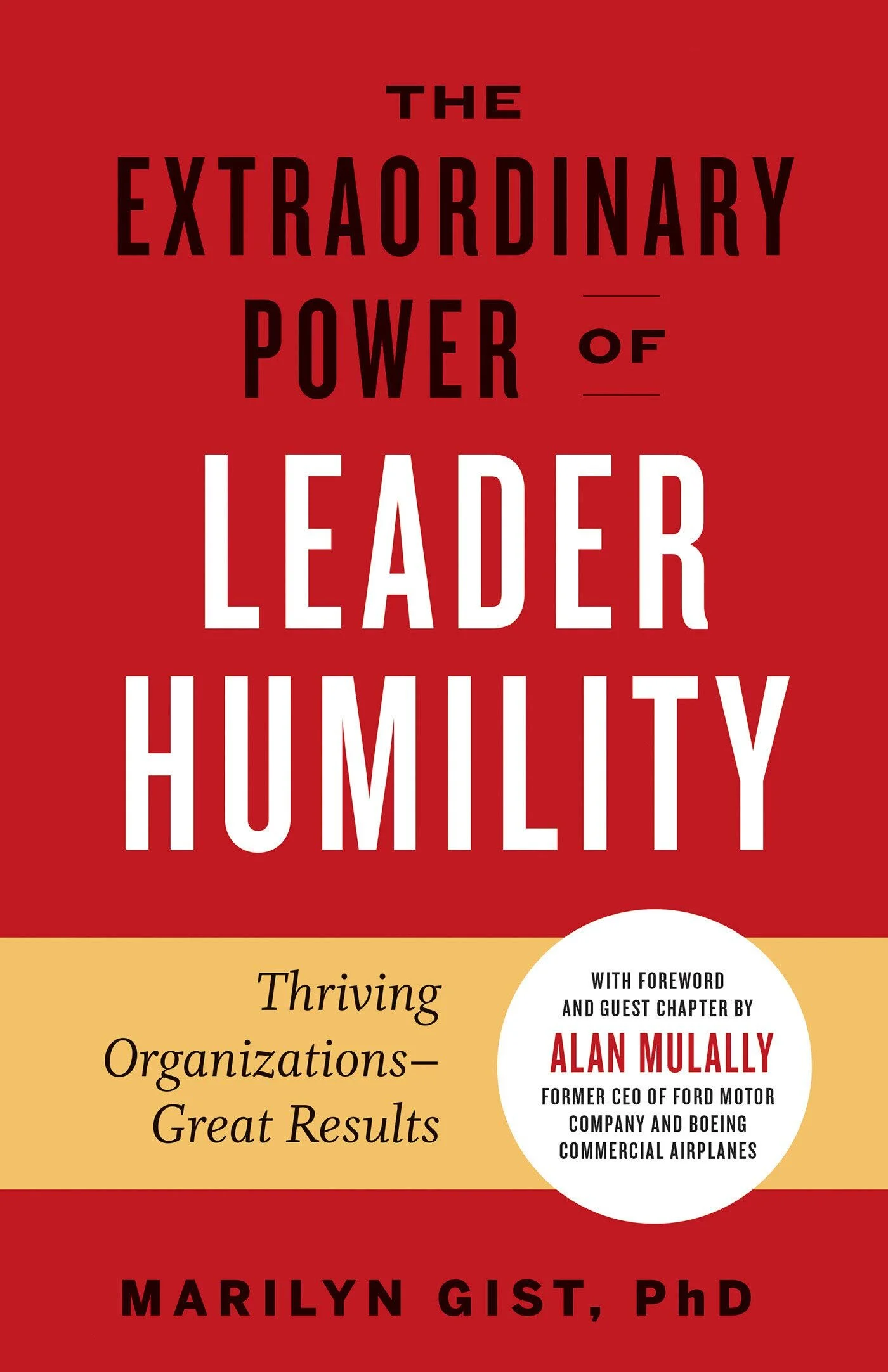
“This inspiring book belongs on the desk of every CEO and politician. With eye-opening case studies and recommended behaviors in every chapter, it's an indispensable user guide for servant leaders.”
—Ken Blanchard, coauthor of The New One Minute Manager and coeditor of
Servant Leadership in Action
On the most fundamental level, leaders must bring divergent groups together and forge a consensus on a path forward. But what makes that possible? Humility—a deep regard for the dignity of others—is the key, says distinguished leadership educator Marilyn Gist.
Leadership is a relationship, and humility is the foundation for all healthy relationships. Leader humility can increase engagement and retention. It inspires and motivates. Gist offers a model of leader humility derived from three questions people ask of their leaders: Who are you? Where are we going? Do you see me? She explores each of these questions in depth, as well as the six key qualities of leader humility: a balanced ego, integrity, a compelling vision, ethical strategies, generous inclusion, and a developmental focus.
Much of this book is based on Gist's interviews with a dozen distinguished leaders of organizations such as the Mayo Clinic, Costco, REI, Alaska Airlines, Starbucks, and others. And the foreword and a guest chapter are written by Alan Mulally, the legendary leader who brought Ford back from the brink of bankruptcy after the 2008 financial collapse and whose work is an exemplar of leader humility.

Your Team Can Make or Break your Business. Let’s Talk about Your Talent Strategy.
As senior leaders, we have all experienced the devastating consequences of one bad hire. Whether this person is outwardly toxic, or they just don’t understand the importance of the company’s culture, the results of a mishire can be devastating. In my position as a strategic coach who has worked with companies in a diverse set of industries with diverse teams, I’ve seen mishires in key senior roles cost companies hundreds of thousands – if not millions – of dollars in lost revenue. Further than that, some of these mishires have even driven outstanding team members away from the company, adding insult to injury. Conversely, the right hire can be a force multiplier – giving your team energy, creatively solving problems, and exercising enthusiasm for what your business is aiming to achieve. Regardless of what type of business you’re in, your people, especially the people in key roles, really make a difference to your success.
So, we know how critical the hiring process is to get right, but we also know that this process can be extraordinarily challenging. In our coaching experience, when businesses don’t have a talent strategy, we’ve seen about a 50% success rate in hiring. This process is crucial, and yet most businesses don’t even know where to begin in creating an effective and reliable strategy to find and recruit the right talent. So, let’s talk about it.
There are four elements that should be present in a strong talent recruitment strategy:
Strong Cultural Foundation
Clear recruitment timeline and clear expectations for roles
Always be recruiting
Rigorous Hiring process
Let’s discuss more in-depth as to what these elements mean.

Strong Cultural Foundation
As senior leaders, we must be able to envision and clearly communicate to our organizations where our companies are going and the steadfast values to which we hold on to get there. What’s more, our teams need to know the values so that they know what behaviors are acceptable, and they need to buy into the long-term goal of the company. This is accomplished with our cultural foundation, and it is critical that everyone in our company buys into and lives out of it. Our cultural foundation includes: BHAG, core values, and core purpose.
BHAG
According to the creator Jim Collins, the BHAG stands for Big Hairy Audacious Goal, and it is a compelling mission for the company – an inspiring, unifying focal point that stimulates and energizes the team to make vast progress. Getting to your BHAG is a long and arduous process, and it is therefore incredibly important that your team is aligned, otherwise you won’t get there. At PFD, our BHAG is to steward a movement that, no matter where you are born, anything is possible.

Core Values
Your core values ask this question: what are the consistent, accepted behaviors of your team members? The key to core values to drive behavior, and they are utterly meaningless if CEO isn’t protecting and stewarding them. These core values drive everything that we do, and the communicate to the world – including our prospective talent, what we stand for. At PFD, our core values are grow to give, create client value, communicate proactively, invest in team and community, and be the confidant.

Core Purpose

Your core purpose answers one very specific question: why does your company exist? It’s a very simple concept, but it is critical that everyone in your organization knows the answer to it. If everyone knows what your core purpose is, you are able to keep on track with your strategic vision, because it creates alignment toward your way of being. At PFD, our core purpose is to steward lives
Clear recruitment timeline and Clear expectations for roles
After you establish your strong cultural foundation, you will need to do some creative thinking and prep work to make sure you understand who you need, and what exactly they will need to do to be successful in their role. We have two tools that will be helpful for this: the Strategic Functional Accountability Chart, and the Job Scorecard. We will get into these tools in a moment, but let’s first talk about how to create an effective strategy that will spur on progress towards your BHAG.
At PFD, we recommend that you align your strategy to a 3-year timeline. This line of thinking comes from thought leader and serial entrepreneur Shannon Susko, who created the 3HAG methodology. The 3HAG is built on the concept of the Big Hairy Audacious Goal (BHAG), and it breaks down this massive goal into 3-year Highly Achievable Goals (3HAG). Three years tends to be this magic number for a timeline – it is just far enough away that you can create a real, tangible strategy towards your BHAG, but it is short enough that you can translate that short-term strategy into a strategic process. Your 3HAG will ignite immense team spirit and serves powerful tool for visionary companies to stimulate progress. From your 3HAG, you can create your 1-year Highly Achievable Goal (1HAG) (encapsulating your annual priorities), as well as your 90-Day Plans (your quarterly priorities)

If you would like to learn more about 3HAG, as well as talent recruitment, make sure to check out our FREE virtual workshop on May 13th, 2021 from 11:00 AM – 1:00 PM MT. Shannon Susko will be joining us that day and we will be giving you personalized feedback on your strategy.
The FACe and SFACe
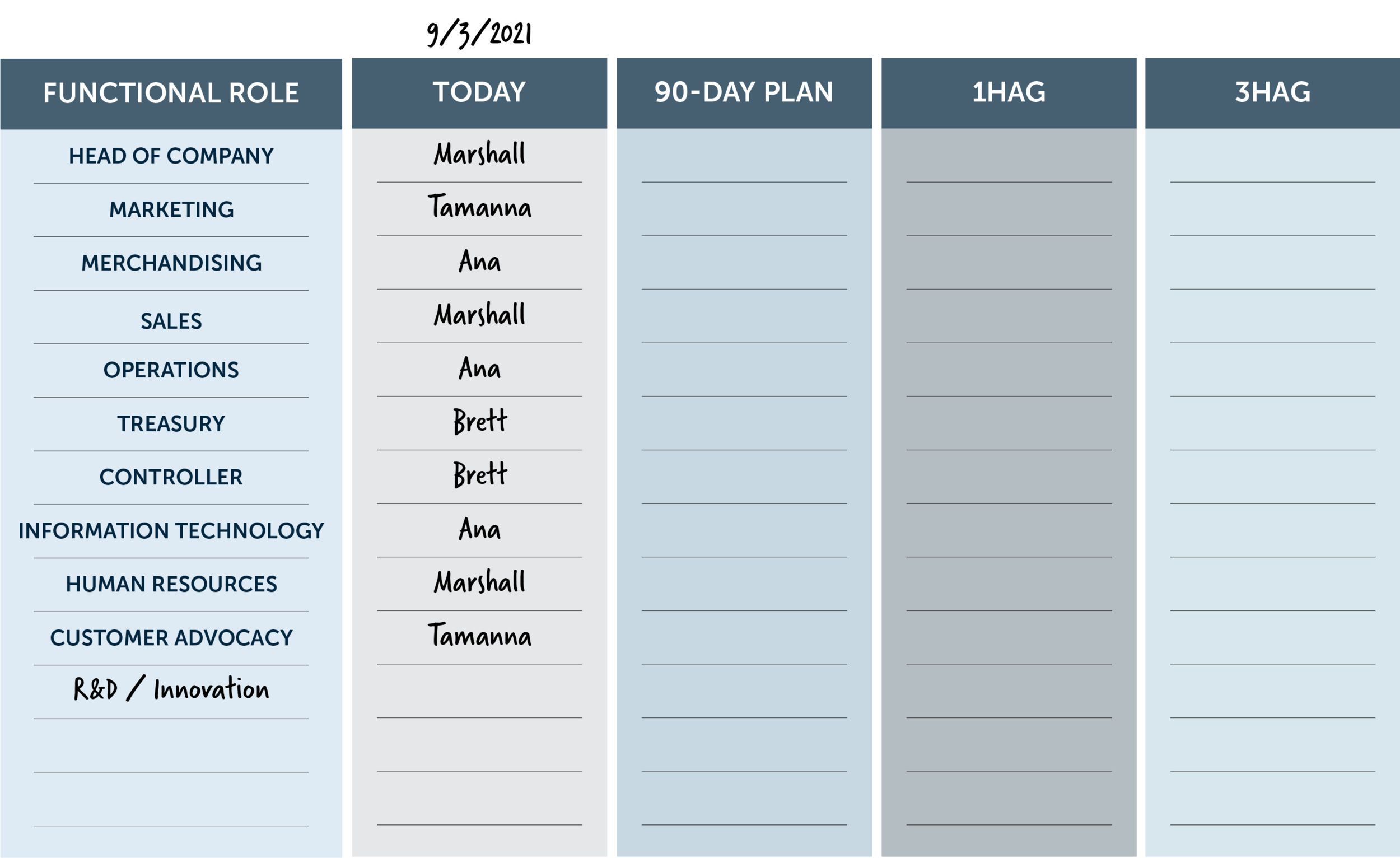
Now that we have the timeline with which you can align your overall strategy to, let’s talk about our current team and what they are accountable for. There is one tool created by Verne Harnish from Scaling Up that helps determine this: the Function Accountability Chart (FACe). We recommend filling out the FACe in a strategy session with the senior team in the room.

Let’s break down the FACe, starting with defining what a function– the “F” is. A function is a key action someone in your organization must take so that your business can grow to meet your 3HAG. It isn’t their title, rather their actions that directly contribute to business health. This is why there is “treasury” and not “CFO” on the chart above. Next, accountability – the “A”- means that there is ONE person that is making sure that progress on that function happens, that progress is tracked. In this column, we are asked to write a name of a person on our team (someone who is able to take on the challenge of making progress in that role. The next two columns then ask us to identify the Key Performance Indicators and Outcomes that they need to Drive.
So, we have our strategy with our 3HAG, 1HAG, and 90-Day-Plan and we have clarity into our people and execution in our company today with our FACe. Here’s what we’re missing to combine the two: if we truly want to achieve our 3HAG, our company needs to look much different than it does today, in terms of our people and their functional roles. Think about it: you as a CEO likely have your name as accountable for several of these functions. With all that you are accountable for, do you truly have time to drive the growth in your 3HAG? You’re already so busy, and you’re just going to get busier. In the next three years, your goal is clear: get your name off any function that isn’t the head of company and fill those functions with extraordinary people that fit your culture to free up your time. See the Strategic Function Accountability Chart:

This tool highlights the people in the key roles in your organization, and who you need to fill what roles and when. For example, perhaps your organization today does little research and development or innovation today. However, you’ve gone through a strategy session with your team, and you have discovered there is a significant gap in the market in your industry for bold innovation, and a strong emphasis for R&D / Innovation is a key differentiator that you have identified as a part of your 3HAG – you know that you need to be moving towards R&D on a 3-Year Timeline, and you will want to fill in that functional role. Then, you will want to fill out the names of who is responsible for what today. Then, with your senior team, consulting your 3HAG, you will want to fill out who will be responsible for what in three years’ time, making sure that every senior member is simplifying their functional role as much as possible. You will want to then work backwards – going through your 1HAG and finally to your 90-Day Plan.
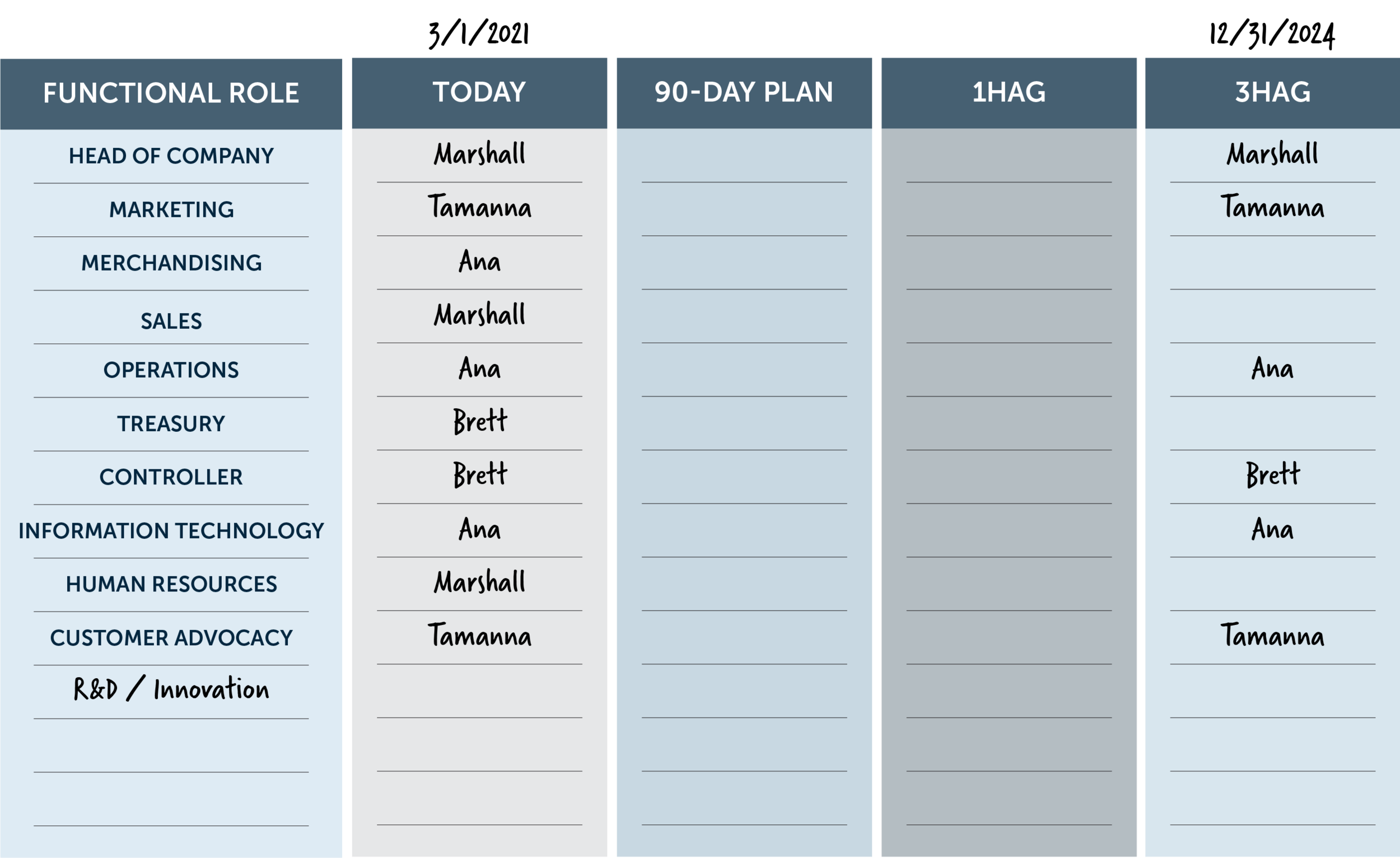
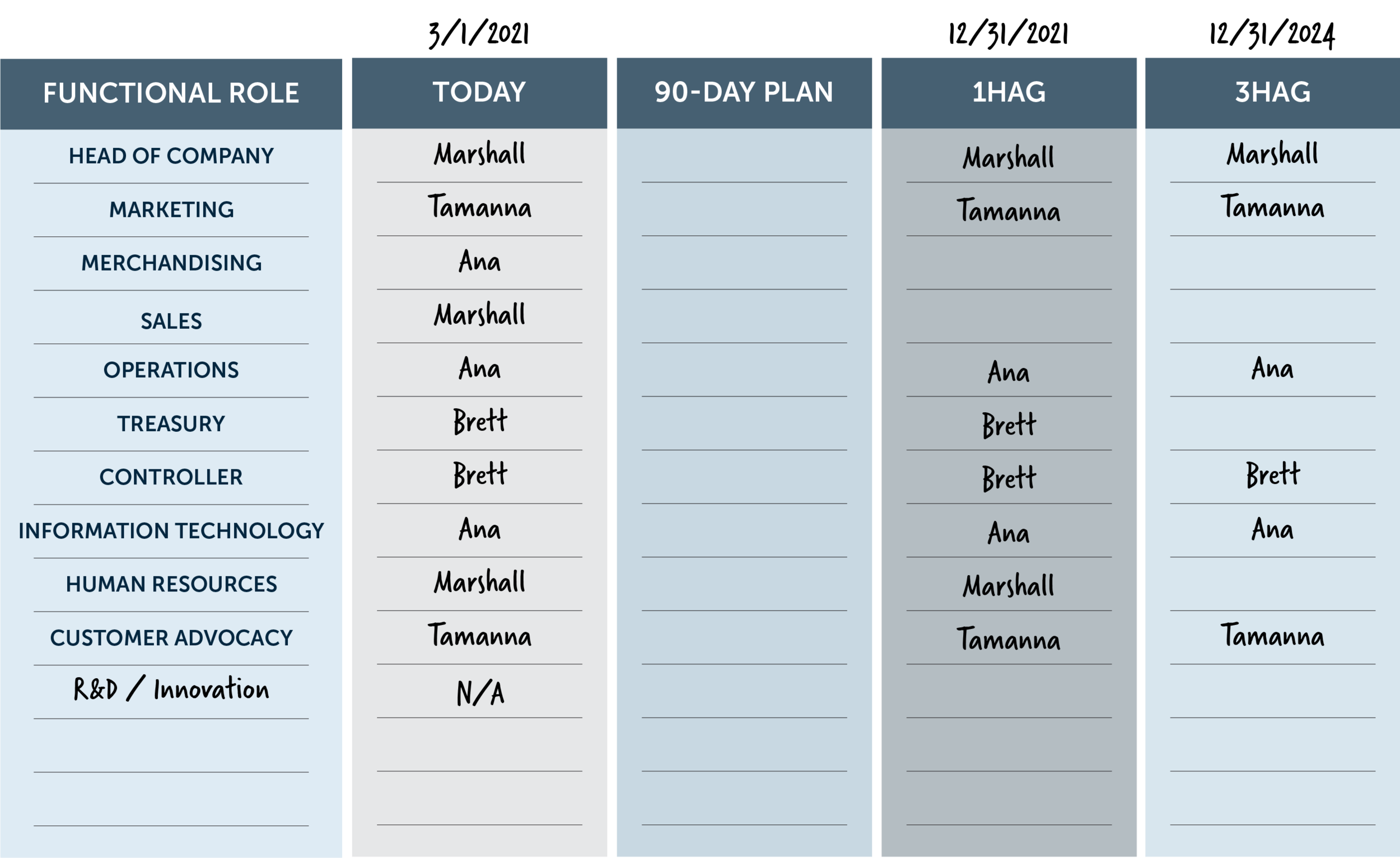
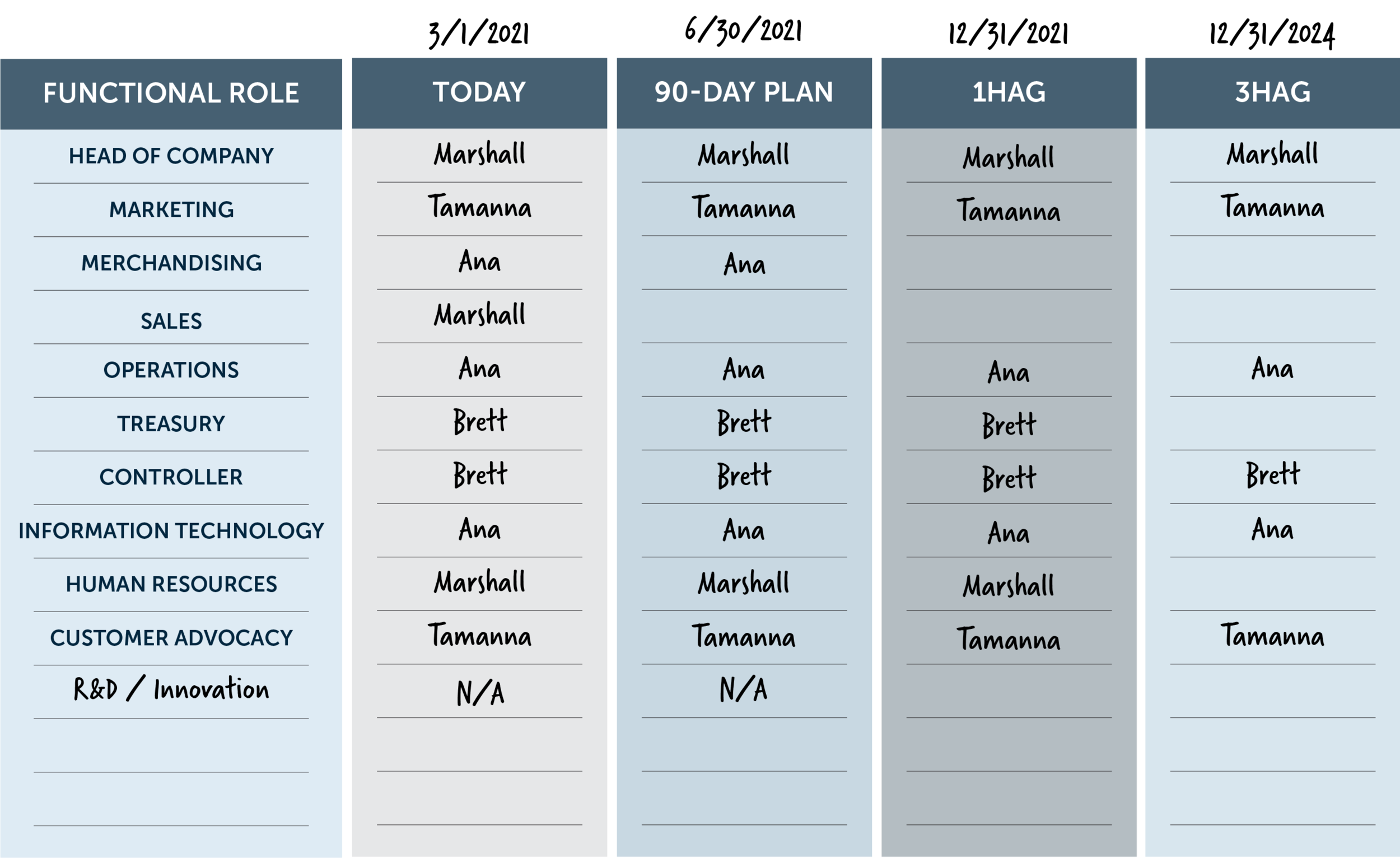
The gaps in your 90-Day Plan reveal your most crucial hires – the role, by the end of the quarter you need filled.
The Job Scorecard
Further than knowing what roles need to be filled, we also need to determine what success looks like in those roles. For that, we recommend creating a Job Scorecard per the Topgrading Methodology. The Job Scorecard isn’t a vague job description, rather it is a detailed, accurate description of what a person’s job is and what their standards of success are, so that any prospective talent will understand exactly their role will be. At PFD, our job scorecards consist of four sections that drive standards of success: their competencies, functional competencies, metrics, and whether or not they exhibit core values.
When you create a Job Scorecard, you should list and accurately define the competencies that you are looking for that will make a person successful at their jobs. Because there are so many competencies, it is a rigorous standard – and we suggest you don’t hire a person that ranks poorly in even one of these competencies.
Always be recruiting
The next critical element of having an effective talent and recruitment pipeline is to quite simply, always be recruiting. If you wait to try to recruit people until you need someone, you won’t have the time you need to go through a rigorous hiring process to properly vet that person. Instead, you need to always be on the lookout for creative and brilliant talent. Consider these four strategies to always have a pipeline of people:
Ask for employee referrals. Your best people will have talented friends, and if you ask, they might have some people in their network that will fill roles that you need. Critically, if you do receive a referral and job application, you absolutely need to make sure that you follow up. If you do not follow up on the referrals, you run the risk of creating a disconnect in trust with your employees, as you are telling them one thing is a priority, and you are acting as though that is not true.
Create community partnerships. With the right community partners, your network vastly opens up, and you might be surprised at the amount of talent that is out there. At PFD, we connect with professors who have similar values to us, and we ask them to refer their best students for internships.
Connect with talent recruitment agencies. Don’t overlook obvious solution to a talent problem, just because it is obvious. As senior leaders, our time and energy are our most precious resources, so if we can take some cash and outsource recruitment activities that are burning up these resources, do it! Find a recruiter who is right for your company (they believe in and live out of your cultural foundation), and let the professionals do their job.
Be opportunistic. Sometimes, we can’t plan when we meet extraordinary talent – but we need to be prepared to recruit them when we do. Always have an understanding of your recruitment needs (per your SFACe) as well as a business card to give out. In the past, I have hired restaurant wait staff into operations roles, and that person excelled in that position.

Rigorous Hiring Process

The last crucial element to a talent recruitment strategy is having a rigorous hiring process. Again, at PFD, we recommend the Topgrading Methodology. The idea behind Topgrading is simple. Most companies hire fast and fire slow, and by doing this, they are hiring and keeping people in their organizations who they wouldn’t “rehire” if given the opportunity. Topgrading adds rigor – it allows those who are making the hiring decisions to truly take their time and consider their candidates. By adding this rigor, we are ensuring that we truly are hiring the right people in the right roles – vastly increasing the success rate hiring from 50% to 90%.
I recommend reading the book Topgrading by Brad and Geoff Smart for more information on this process.
With these four elements, you should vastly improve your talent and recruitment strategy – being able to hire the right people in the right roles at the right time.
If you would like to talk more in-depth about any of the concepts listed here, as well as your overall business strategy, we would be happy to chat with you at the FREE May 13th, 2021 Virtual Workshop with Shannon Susko.