
The Power of Margin
When I start working with high-growth founder CEOs, I often see a similar pattern.
Full calendars.
Decisions that never stop.
First in, last out.
It looks like commitment. But it’s actually a warning sign.
From the outside, the business may look healthy. Revenue is growing. The team is busy. On paper, things still look successful.
But internally, something starts to shift.
Decision-making flows upward. Leaders wait instead of owning. Important conversations get delayed because everything still runs through one person.
The team is capable. But over time, the business becomes increasingly dependent on one leader to keep everything moving.
Being busy is not a badge of honor.
The CEO has slowly become the ceiling.
That’s what a lack of margin often looks like.
What margin actually creates
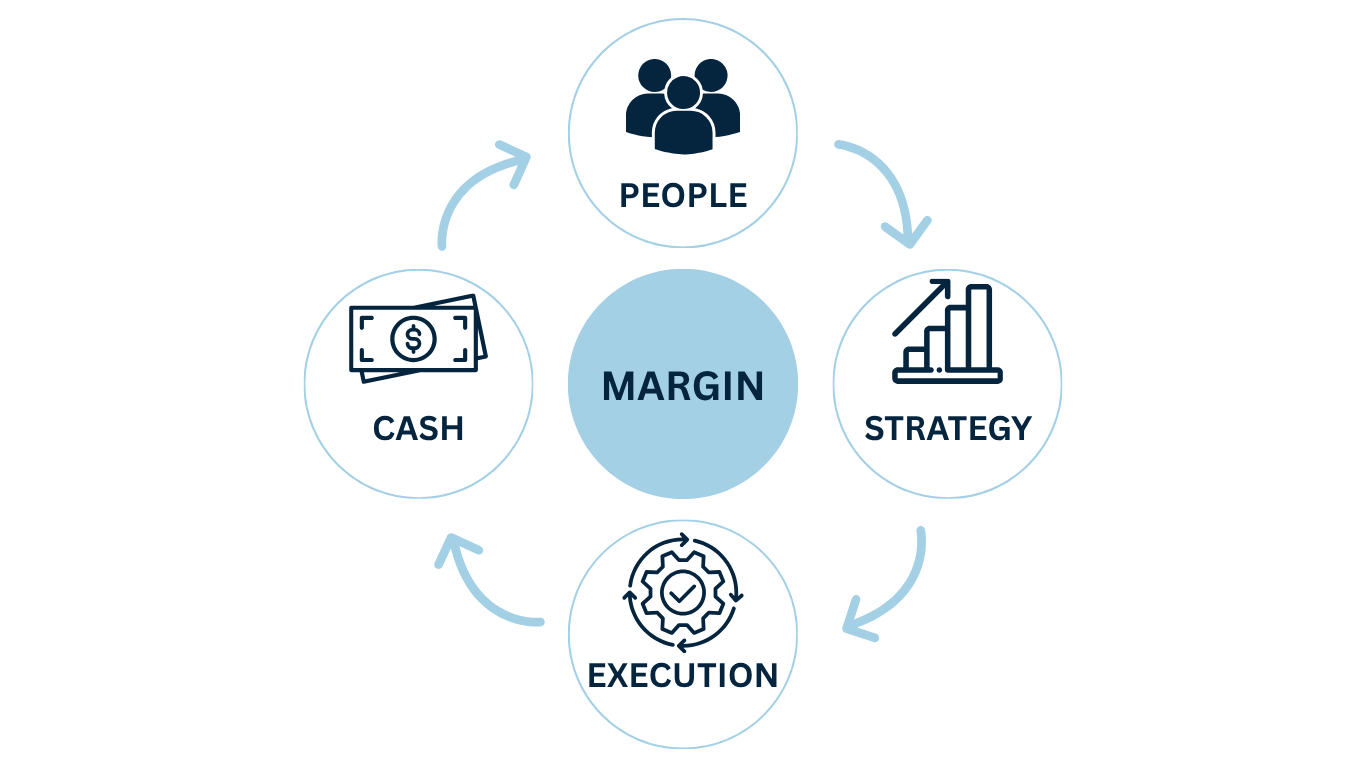
Margin is the space between your next commitment and your capacity to think clearly.
It’s not a luxury.
It’s what allows leaders to stay strategic, develop leaders around them, and lead from clarity instead of constant reaction.
What the best leaders protect
The healthiest leaders I know protect their margin.
Space to think.
Space to reflect.
Space to develop the people around them.
Space to develop the business.
The best thinking doesn’t happen in back-to-back meetings.
It happens on a walk. During quiet thinking time. In quality conversations that aren't rushed.
For me, it often comes through a committed morning routine, yoga, flying, time in nature, travel, and quality time with family and friends. I’m also privileged to lead a team that steps into leadership to better serve our clients.
Where to start
Margin has to be built intentionally.
Start small. Ninety minutes a week. One block protected on the calendar.
But for many CEOs, the deeper issue is not just the calendar.
It’s that too many decisions still flow back to the CEO.
Over time, that creates a business where leaders wait instead of owning and the CEO becomes the bottleneck for clarity, direction, and decision-making.
The Function Accountability Chart is one of the first tools I use when I start working with leadership teams. When ownership becomes clear, leadership teams stop reacting and start leading together.
Where does your clearest thinking happen, and how much of your week is actually designed around it?
Does every person on your leadership team know exactly what winning looks like in their seat?
Your business needs the best of you. And so does everyone else in your life.